


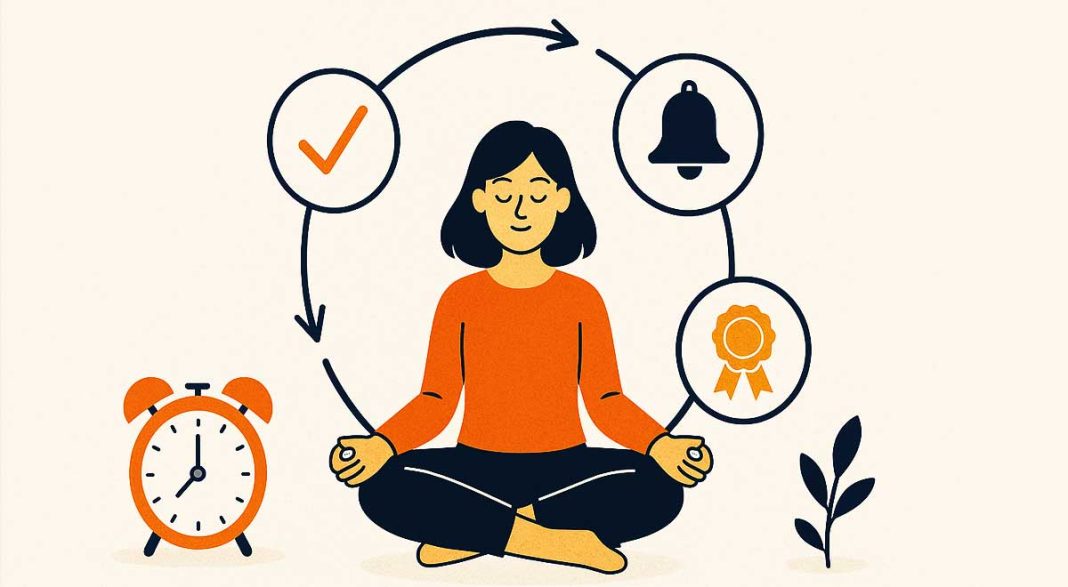
The Neuroscience of Habit Formation
It’s not just willpower. It’s wiring. Your brain is constantly running little loops—tiny behavioral scripts it’s memorized over time to save energy. That’s how habits are born. But what if you could hack that system? What if the science behind your everyday rituals could help you stop doomscrolling at midnight or finally become a morning workout person?
Key Takeaways:
- The basal ganglia helps shift repeated actions into autopilot—making habits feel effortless over time.
- Cue → Routine → Reward loops are nuanced, with triggers ranging from emotional to environmental.
- Identity is a powerful force in habit retention—what you believe about yourself matters.
- Habit success hinges on simplicity, emotional reward, and contextual consistency.
- Even mini habits (30 seconds, 1 sentence) can unlock lasting change when scaled gradually.
- Your environment, social circle, and tracking systems can either support or sabotage your routine.
Brain Shortcuts: Prefrontal Cortex → Basal Ganglia
When you first learn a new behavior—like stretching upon waking—you rely heavily on your prefrontal cortex, the seat of decision‑making, analysis, and self‑control. With repetition, though, the basal ganglia step in. Cue arrives (your alarm), basal ganglia says, “I got this,” and boom—you stretch without thinking. Habits on autopilot.
Breaking Down the Habit Loop: Additions & Nuance
Cues: All the Faces
- Time‑based: Every day at 7 AM, phone alarm, calendar alert.
- Emotional/Sensory: Anxiety cues coffee, tiredness cues caffeine.
- Environmental: Couch = phone, kitchen = snack, desk = slump.
- Social: People and settings cue habits automatically.
Routine:
Anything you physically, mentally, or emotionally do.
Reward:
Not just feel‑good—it seals the loop with dopamine, making actions stick. A meaningful reward matters more than a “should‑do.”
The Strength of Habit: Frequency × Context × Identity
- Frequency: The more often, the stronger.
- Context: Regular cues—time or place—make habits bulletproof.
- Identity: “I am someone who meditates.” Belief fuels persistence.
“Habits are repeated, learned behaviors, but they have neurochemical and physiological correlates in the brain.” — Peter Hollins, quoted on Bookmate
Building Better Habits: The Habit Design Toolkit
A) Pick One, Right‑Sized, Identity‑Aligned
Choose one small habit—anchored to who you want to be.
B) Choose Smart Cues
- Reliable—like an existing daily action (e.g. after brushing teeth).
- Specific (“right after I place my mug on the counter”).
- Visible—don’t hide it.
C) Make Routines Tiny & Enjoyable
- Require so little you can’t say no (e.g., 30‑second stretch).
- Pair with delight (playlist, candlelight, cozy sweater).
D) Maximize Rewards
- Connect habit to how it makes you feel—calmer, connected.
- Celebrate instantly and share with others to amplify joy.
E) Track with Care
- Visual checks build momentum.
- Weekly reflection: what worked, what shifted.
F) Plan for Setbacks
- Acknowledge slips—they’re data, not failure.
- Restart ASAP; use clear if‑then offsets.
Changing or Breaking Old Habits
- Cue: Sitting on couch after dinner.
- Routine: Phone → doom‑scrolling.
- Reward: Distraction, chill, escape.
Swap in new routine: tea, book, knitting—plus ambiance for extra reward.
“Dopamine is a powerful driver of the three‑step habit formation loop.” — Peter Hollins, *Neuro‑Habits*
Scaling Up: Beyond Mini Habits
After 30 days of tiny practice, build layer by layer—30 sec → 1 min, 1 sentence → reflective journal. Grow slowly with low friction.
Environmental Tweaks
- Visual triggers—journal + pen on nightstand, mat in the corner.
- Hide distractions; outwardly cue habits.
- Stack habits (brush, stretch, journal).
- Share intentions—display, involve a friend.
Habit Fatigue & Willpower
Willpower is finite—it tires out. Reduce decision load: one prompt, one habit. That’s why tiny habits thrive.
Sophie’s Real‑Life Habit Overhaul
Week 1: One‑sentence journal before bed; cushion shift = reward.
Week 2: Expand to gratitude list + candle ambiance.
Week 3+: Add journal prompts and buddy check‑ins.
The Emotional Heart of Habit Work
Habits aren’t just routines—they’re emotional touchpoints. Little acts of self‑care and identity‑building.
“The neuroplastic brain is one that can change. It’s the reason you were able to develop bad habits in the first place; but it’s also the reason you’ll be able to break them and form new, more beneficial habits.” — Peter Hollins, *Neuro‑Habits*
Common Pitfalls & Course‑Corrections
| Pitfall | What Happens | Course‑Correct |
|---|---|---|
| All‑or‑nothing | “Miss a day = failure.” | Reframe slip as restart opportunity. |
| Unrealistic scale | Overwhelm kills momentum. | Scale back to mini habit. |
| Ambiguous cue/reward | No follow‑through. | Make them explicit. |
| Not adjusting | Habits die with life shifts. | Weekly reflect and tweak. |
| Reward too abstract | Feels like a chore. | Anchor in feeling. |
Habit + Values + Goals
Match habits to your deeper why—resilience, vitality, connection. Tiny acts gain meaning.
Social Habit Builders
- Accountability keeps you honest.
- Shared language and comradery help stickability.
- Try group micro‑habit challenges.
Tracking That Inspires (Not Obsesses)
- Visible, simple marking + weekly reflection.
- Skip? Log context—not guilt.
“Habit formation is incredibly useful because the conscious mind is the bottleneck of the brain. … Whenever possible, the conscious mind likes to pawn off tasks to the non‑conscious mind to do automatically. This is precisely what happens when a habit is formed.” — Anonymous, Goodreads
Final Thoughts: Living With Intention
Tiny habits are the mortar holding your life’s stones together. They signal, “I care.”
- Choose one tiny habit you’re considering.
- Anchor it to a clear cue you already have.
- Keep the routine so small you can’t say no.
- Choose a meaningful reward.
- Track for 7 days, reflect, adjust gently.
- If you slip? That’s insight—not failure.

