

It feels like the world is spinning faster than ever, right? Between new tech popping up daily and AI getting smarter by the minute, staying on our toes is a full-time job. We’re trying to figure out how to keep up, how to actually get good with these new tools, and how to make sure we’re still the ones in charge of our own work and lives. It’s a lot, but we’re tackling it head-on, aiming for that sweet spot of being super adaptable and knowing our way around AI, even when everything keeps changing.
Key Takeaways
- We need to stop just reacting to change and start actively looking for it, like embracing a ‘beginner’s mind’ even when we think we know stuff. It’s about staying curious and open.
- Thinking like a scientist means questioning our own ideas and being ready to change our minds when new information comes along, instead of sticking to old beliefs like a preacher.
- When AI becomes a partner, not a master, we can focus on what makes us human. It’s about using AI to help us, not replace our thinking.
- The flood of AI-generated content can be overwhelming. We need smart ways to manage this ‘workslop’ so AI actually helps us get things done better, not just faster.
- Our ability to make our own choices and be in control is our biggest strength. We need to hold onto that, even as AI suggests more and more.
Don’t Be A Robot, Be A Human-Shaped Robot
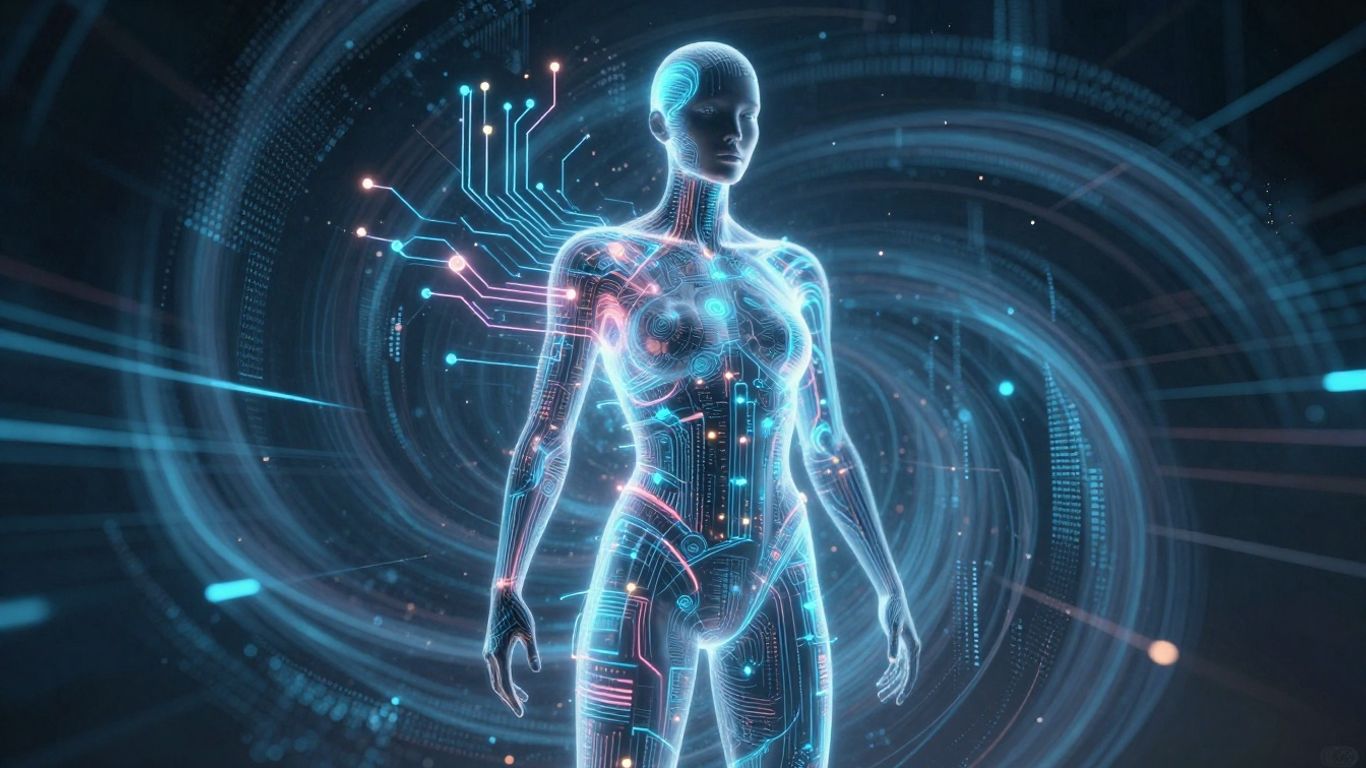
Okay, let’s talk about this whole ‘robot’ thing. We’re not trying to become mindless automatons, right? The goal isn’t to be a robot, but more like a human-shaped robot. Think of it as having a super-smart assistant that knows when to take the wheel and when to just hand it back to you. It’s about blending our human smarts with AI’s processing power, not getting replaced by it.
Embracing The ‘Shoshin’ Mindset: Beginner’s Luck Forever
Remember that feeling when you first tried something new and just nailed it? That’s the ‘Shoshin’ mindset, or beginner’s mind. It’s about approaching everything, even with AI, like it’s the first time. We gotta ditch the idea that we’re supposed to know everything already. AI is changing so fast, if we’re not careful, our knowledge gets stale quicker than milk in the sun. So, we need to stay curious, ask dumb questions (there are no dumb questions when AI is involved, seriously), and be okay with not having all the answers. It’s like being a perpetual student, but way cooler because you get to play with fancy new tech.
Thinking Like A Scientist, Not A Preacher (Or A Politician)
This is a big one. Instead of preaching what we think AI should do or making grand pronouncements, we should be experimenting. Treat AI like a science project. Form a hypothesis, run a test, see what happens, and then adjust. Did the AI tool actually make that report faster, or did it just generate a bunch of fancy-sounding nonsense? We need to be okay with things not working out perfectly the first time. Scientists don’t get mad when an experiment fails; they learn from it. Politicians, well, that’s a different story. We need to be data-driven, not dogma-driven. This means we’re constantly checking our assumptions and letting the results guide us, not just what sounds good in a meeting. It’s about being honest about what’s working and what’s not, even if it’s a bit messy.
When AI Becomes Your Co-Pilot, Not Your Boss
This is where the ‘human-shaped robot’ idea really clicks. We want AI to be our co-pilot, helping us navigate the skies, but we’re still the ones in the captain’s seat. It’s about delegation, not abdication. We tell the AI what the mission is, what the parameters are, and what the desired outcome looks like. Then, it helps us get there. But we’re still the ones making the final calls, checking the instruments, and deciding when to change course. It’s like having a super-efficient intern who can crunch numbers and draft emails, but you’re the one who signs off on everything. We need to be super clear about what decisions are ours to make and what tasks we can hand over. This keeps us in charge and ensures the AI is serving our goals, not the other way around. It’s about maintaining our agency, our ability to make choices, even when the tech is doing a lot of the heavy lifting. We’re not just passengers; we’re the pilots with a really, really good navigator. This is how we can blend digital intelligence with the physical world without losing ourselves in the process.
Navigating The AI Jungle: Where To Go When The Map Changes
Okay, so the map we’ve been using? It’s officially outdated. Like, ‘dial-up internet’ outdated. We’re talking about a world where the ground beneath our feet is constantly shifting, thanks to AI. It’s not just about keeping up anymore; it’s about figuring out where to even point ourselves when the landscape changes faster than we can blink. Remember when planning three years out was a thing? Yeah, me neither. Now, some big-shot tech folks are lucky if they can see three months ahead. It’s a bit like trying to build a sandcastle during a tsunami – exciting, maybe, but mostly just chaotic.
From ‘Change-Ready’ To ‘Change-Seeking’: The Next Level Up
Being ‘change-ready’ used to be the goal, right? Like, ‘I’m prepared for whatever comes.’ Now? That’s basically saying you’re ready to be left behind. We need to be change-seeking. This means actively looking for what’s next, not just bracing for impact. Think of it like this: instead of waiting for the next big AI update to drop and then scrambling to figure it out, we should be poking around, seeing what’s brewing, and maybe even trying to influence it a little. It’s about being proactive, not just reactive. We’re not just adapting; we’re trying to get ahead of the curve, or at least surf it instead of getting wiped out.
Why Standing Still Is The New ‘Going Viral’ (In A Bad Way)
Seriously, if you’re not moving, you’re falling behind. It’s that simple. In the old days, standing still might have meant you were stable. Now, it means you’re becoming irrelevant faster than you can say ‘algorithm.’ Companies are already cutting jobs because AI can do things faster and cheaper. If our skills aren’t evolving, we’re basically volunteering to be replaced. It’s a bit scary, but also kind of motivating? We have to keep learning, keep trying new things, and not get too comfortable. This isn’t about just learning new software; it’s about fundamentally changing how we approach our work and our lives. We need to embrace the idea that continuous learning is just part of the gig now, like paying taxes or complaining about the weather. Check out some change management strategies if you’re feeling overwhelmed.
The Art Of The Early Bird In A World Of AI Night Owls
AI is like that friend who stays up all night coding or experimenting. It doesn’t sleep, it doesn’t get tired, and it’s constantly churning out new stuff. So, how do we compete? We become the early birds. This means getting curious and getting hands-on before everyone else is forced to. It’s about experimenting with new AI tools, understanding their quirks, and figuring out how they can actually help us, not just replace us. It’s not about being the smartest person in the room anymore; it’s about being the most adaptable. We need to be willing to look a bit silly trying out new tech, to ask the dumb questions, and to learn from our mistakes. Because honestly, the AI isn’t going to wait for us to catch up. We have to be the ones making the effort to understand this new world, or we’ll just be left wondering what happened. It’s about taking ownership of our own learning journey, even when it feels like we’re just guessing.
Your Brain On AI: Upgrades, Downgrades, Or Just A New Operating System?
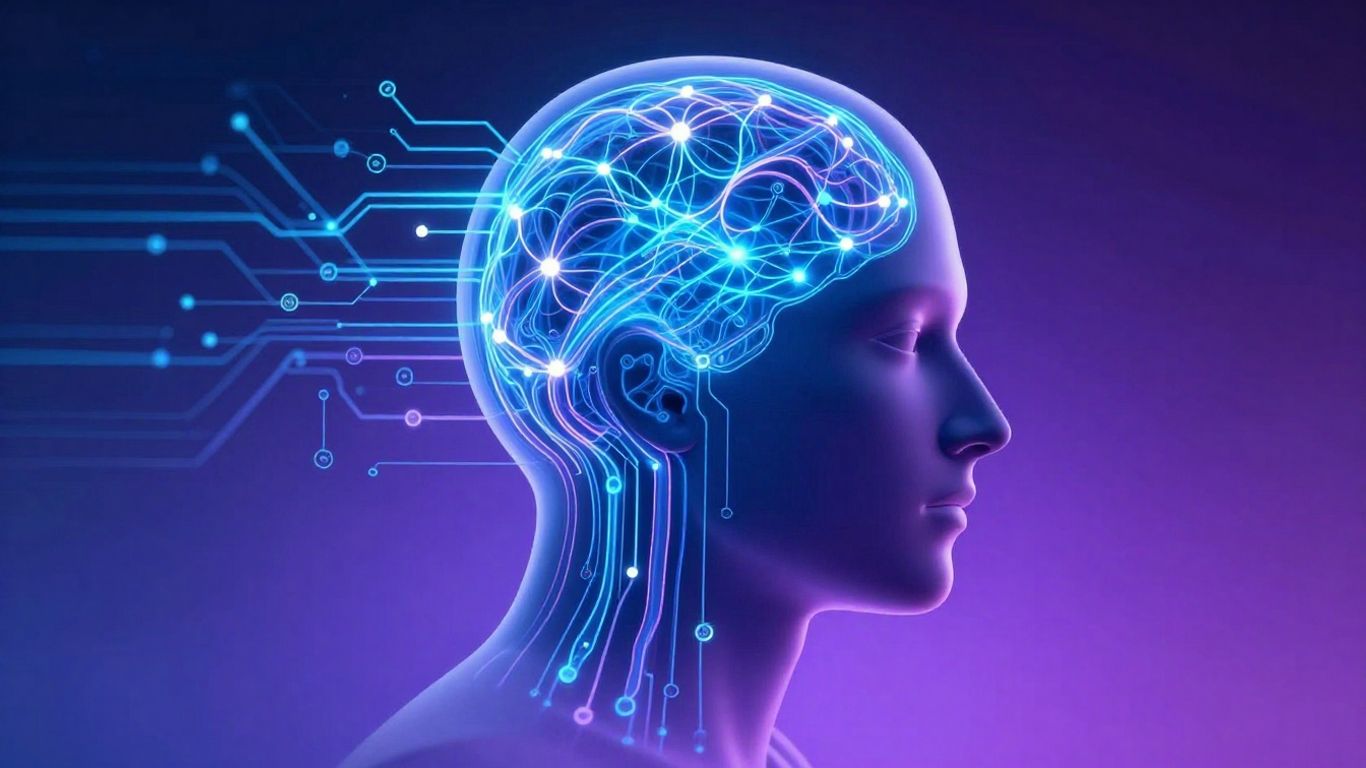
So, we’ve got these AI tools zipping around, making things happen faster than we can blink. It’s like our brains are suddenly in a race, and we’re not sure if we’re getting a turbo boost or if the engine’s about to sputter out. Are we upgrading our mental hardware, or just installing a new, slightly glitchy operating system? It’s a wild thought, right? We’re all trying to figure out what this means for how we think, learn, and just generally be.
Cognitive Gymnastics: Flexing Your Adaptive Expertise Muscles
Think of your brain like a muscle. If you only ever lift the same tiny dumbbell, you’re not going to get much stronger. AI is like suddenly being handed a whole gym full of weird, new equipment. We’re talking about needing to get good at spotting when an AI is just spitting out nonsense versus when it’s actually got something useful. It’s less about knowing all the facts (AI’s got that covered, mostly) and more about knowing what to do with the facts, or even the AI’s version of facts. We need to get really good at asking the right questions, figuring out if the AI’s answer actually makes sense in the real world, and knowing when to just step back and use our own noggin. It’s a whole new kind of mental workout, and frankly, some days it feels like we’re all just flailing around.
Metacognition: The Superpower Of Knowing What You Don’t Know
This is where things get really interesting, and maybe a little humbling. Metacognition is basically thinking about your own thinking. With AI around, this skill is becoming super important. It’s like having a little internal GPS that tells you when you’re lost. We need to be able to recognize when we’re relying too much on the AI, or when we’re just accepting its output without really checking it. The real trick is admitting when we don’t know something, and then figuring out the best way to find out, whether that’s through AI or good old-fashioned human effort. It’s about being honest with ourselves about our own knowledge gaps and biases, especially when the AI might be feeding us something that sounds right but is totally off. It’s a bit like that moment you realize you’ve been singing the wrong lyrics to a song for years – a bit embarrassing, but necessary to fix.
Psychological Flexibility: Rolling With The AI Punches
Let’s be real, AI is going to throw some curveballs. Things will change, tools will update, and what worked yesterday might be totally useless tomorrow. Psychological flexibility is our ability to just roll with it. It’s about not getting too attached to one way of doing things and being okay with a bit of uncertainty. When AI starts doing a lot of the heavy lifting, we might feel a bit… redundant. But that’s where we need to pivot. Instead of panicking, we can use that freed-up brain space to focus on the stuff AI can’t do – like creativity, empathy, and complex problem-solving that requires a human touch. It’s about adapting without losing our cool, and remembering that even when the tools change, our core human abilities are still the most important thing. We’re learning to be okay with not having all the answers ourselves, and trusting that we can figure things out as we go, even when the map keeps changing. It’s a bit like learning to ride a bike all over again, but with more digital distractions.
The ‘Workslop’ Problem: When AI Creates More Mess Than Magic
Okay, let’s talk about the elephant in the room, or rather, the digital sludge in our inboxes. We’ve all seen it, right? That AI-generated text that sounds almost right, but is just a little… off. It’s like getting a perfectly polite but utterly nonsensical answer to a question you didn’t even ask. We’re drowning in what I like to call ‘workslop’ – the digital equivalent of a poorly made omelet, full of good intentions but ultimately a mess.
Battling The Barrage Of AI-Generated ‘Slop’
It’s gotten to the point where you can practically smell the AI. The overuse of certain phrases, the oddly formal tone when you’re just trying to figure out lunch plans, the way it explains things you already know in excruciating detail. It’s like a robot trying to tell a joke – the structure is there, but the punchline is missing, or worse, it’s just plain awkward. We’re spending more time sifting through this digital detritus than actually getting things done. It’s exhausting, frankly. We need to get better at spotting this stuff, not just for our own sanity, but to stop it from polluting our own communication. We’re becoming professional AI-content-detectives, and frankly, it’s a terrible job.
Turning AI From A Productivity Hype Train Into A Real Engine
The promise of AI was supposed to be more free time, more creativity, more us time. Instead, we’re often stuck babysitting the AI, correcting its mistakes, and trying to make its output usable. It’s like buying a fancy new gadget that requires more setup and maintenance than it’s worth. We need to shift our thinking from just using AI to integrating it smartly. Think of it less like a magic wand and more like a really enthusiastic, but slightly clueless, intern. We need to give it clear instructions, check its work, and guide it towards actually helpful outcomes, not just more noise. It’s about making AI a tool that genuinely helps us, rather than just adding to our workload. We need to focus on the essential tasks AI can truly help with, cutting out the fluff [9ff6].
Operationalizing AI: Making It Work Without Breaking Everything
So, how do we actually make this work? It’s not about ditching AI altogether, that ship has sailed. It’s about being deliberate. We need to set clear goals for what we want AI to do and, just as importantly, what we don’t want it to do. Think about it like building a kitchen – you need a plan, the right tools, and a good workflow. You wouldn’t just throw appliances randomly into a room and expect it to function, right? The same applies here. We need to establish some ground rules, some best practices for how we interact with these tools. This means:
- Defining clear tasks: What specific problem are we trying to solve with AI?
- Setting quality checks: How will we verify the accuracy and usefulness of AI output?
- Establishing human oversight: Where does our judgment and creativity come in?
- Training ourselves and our teams: Understanding the AI’s limitations is as important as knowing its capabilities.
We’re in a weird spot where the tech is moving faster than our ability to figure out how to use it without making a bigger mess. It feels like we’re all just improvising, hoping for the best. But improvisation only gets you so far before you need a solid plan.
Ultimately, the goal is to make AI work for us, not against us. It’s about harnessing its power without getting buried under a mountain of digital junk. We need to be the architects of our AI integration, not just passive recipients of whatever it spits out. It’s a challenge, for sure, but one we absolutely have to tackle if we want to stay sane and productive in this AI-driven world.
Agency: The Human Superpower AI Can’t (Yet) Steal
Staying The Author Of Your Own Story (And Your Own Decisions)
Okay, let’s talk about the elephant in the room, or rather, the algorithm in the room. We’re all getting pretty cozy with AI, right? It’s helping us write emails, brainstorm ideas, and probably even pick out our outfits (don’t judge). But here’s the thing: as AI gets smarter, it’s easy to feel like we’re just passengers on this technological joyride. We need to remember that we’re still the ones holding the steering wheel. Our ability to make our own choices, to be the main character in our own lives, is our ultimate superpower. It’s about not letting the convenience of AI turn us into passive observers of our own existence.
When AI Does The Heavy Lifting, What’s Left For You?
So, AI is doing a bang-up job of crunching numbers, sorting data, and even writing decent prose. It’s like having a super-smart intern who never sleeps. But what does that leave us humans to do? Well, it frees us up for the stuff AI can’t do. Think creativity, critical thinking, empathy, and, you know, actual human connection. It’s not about being replaced; it’s about being re-focused. We get to ditch the grunt work and lean into what makes us, us. It’s like when you finally hire someone to clean your house – you don’t just sit there; you go out and do something fun, or maybe even something productive that requires your unique human touch. This shift means we need to get good at asking the right questions, not just getting the right answers from AI. It’s about guiding the process, not just consuming the output. We’re the directors, AI is just a really, really good actor.
Reclaiming Your Judgment In A World Of Algorithmic Suggestions
We’re bombarded with suggestions from AI all day long. Your streaming service knows what you should watch next, your news app knows what you need to read, and your shopping cart is practically filling itself. It’s easy to just click ‘yes’ and go with the flow. But our own judgment, that gut feeling, that ability to weigh things up based on our own values and experiences – that’s gold. We need to actively practice using it. Think of it like this:
- Question the Recommendation: Don’t just accept the first AI suggestion. Ask yourself, ‘Does this really fit what I’m looking for?’
- Cross-Reference (with Humans!): Talk to other people. Get different perspectives. AI is great, but it doesn’t have your best friend’s quirky insights.
- Trust Your Gut: If something feels off, even if the AI says it’s perfect, listen to that inner voice. It’s usually right.
The danger isn’t that AI will become too smart; it’s that we’ll stop thinking for ourselves and blindly follow its lead. We need to be the ones making the final call, using AI as a tool, not a dictator. It’s about maintaining that human spark of independent thought and decision-making, even when the algorithms are whispering sweet, logical nothings in our digital ears. We’re not just users; we’re the ultimate arbiters of our own reality. We need to remember that our ability to make choices, even imperfect ones, is what keeps us human and in control. This is especially true as AI becomes more integrated into critical infrastructure, like the kind Marvell Technology provides for data centers.
It’s a constant balancing act, for sure. We want to use these amazing tools, but we don’t want them to use us. So, let’s keep our agency front and center. It’s the one thing AI can’t replicate, and it’s what makes us, well, us.
Building A Future-Proof You: Beyond Just ‘Learning Stuff’
Okay, so we’ve talked a lot about adapting and keeping up with AI. But let’s be real, just cramming new facts into our brains isn’t going to cut it anymore. It’s like trying to fill a leaky bucket. We need to think bigger, about building ourselves into something that can handle whatever the future throws at us, and not just survive, but actually get stronger from it. Think of it as becoming antifragile, not just resilient. Resilience is bouncing back; antifragility is getting better because of the hit.
Lifelong Learning: Because Your Degree Expired Yesterday
Remember when a college degree felt like a golden ticket for life? Yeah, me neither. The pace of change means that what we learned even a year ago might be… well, let’s just say ‘vintage’. So, learning can’t be a one-and-done deal. It’s got to be a lifestyle. We’re talking about constantly tinkering, experimenting, and picking up new skills. It’s less about formal education and more about a curious, ‘learn-it-all’ attitude. This means actively seeking out new information, trying things out even if we might mess up, and seeing every challenge as a chance to level up. It’s about staying flexible and being okay with not knowing everything, because honestly, who does?
Ethical AI: Asking The Awkward Questions
As AI gets more integrated into our lives, we can’t just blindly accept it. We need to be the ones asking the tough questions. Who is this AI really helping? Who might it be hurting? What values are baked into its code? Are we building a world we actually want to live in? These aren’t just philosophical musings; they’re practical considerations for how we use and develop technology. It’s about making sure AI serves us, not the other way around. We need to be the ethical compass in this rapidly evolving landscape.
Resilience As A Lifestyle, Not A One-Time Fix
We’ve all heard about resilience, right? It’s that ability to bounce back after a setback. But in today’s world, just bouncing back isn’t enough. We need to be building ourselves up so that challenges actually make us better. This means cultivating a mindset where we see difficulties not as roadblocks, but as opportunities to grow stronger. It’s about developing what some call ‘durable skills’ – things like adaptability, critical thinking, and collaboration. These are the human skills that AI can’t easily replicate. They’re the bedrock of our ability to not just cope with change, but to thrive in it. It’s about making continuous adaptation a habit, not just a reaction to a crisis. We need to be ready to rethink our careers constantly.
The only constant is change, and our ability to adapt is our greatest asset. We need to move beyond simply acquiring knowledge and focus on building a flexible, ethical, and antifragile self.
So, What’s the Takeaway?
Look, we’re all just trying to keep up, right? This whole AI thing is like that one friend who shows up to a party with a completely new look – you’re a little surprised, maybe a bit confused, but also kinda curious. We’ve talked about how things are changing faster than a toddler’s mood swings and how we need to be ready to roll with it, maybe even get a little excited about it. It’s not about becoming robots ourselves, but about figuring out how to work with these new smart tools without losing our own marbles. So, let’s keep learning, keep asking questions (even the silly ones), and try not to freak out too much. We’re in this together, and hey, at least we’ll have some wild stories to tell later.
Frequently Asked Questions
Why is it important to stay curious and open to new ideas, even when we think we know a lot?
It’s super important to keep that ‘beginner’s mind’ feeling, you know? Even if you’re really good at something, the world changes fast, especially with AI. If we stop being curious, we might miss out on new ways of doing things or even become outdated. Think of it like always being excited to learn something new, like it’s your first time – that keeps you sharp and ready for whatever comes next.
How can we avoid just accepting what AI tells us and keep our own thinking skills sharp?
That’s a big one! We need to think like scientists, not just believe everything we hear or read. This means questioning things, looking for proof, and being okay with being wrong sometimes. When AI gives us information, we should check it, see if it makes sense, and use our own brains to make the final call. It’s about using AI as a helper, not a boss.
What does it mean to be ‘change-seeking’ instead of just ‘change-ready’?
Being ‘change-ready’ means you can handle change when it happens. But ‘change-seeking’ is even cooler! It means we actively look for changes and new opportunities before we even have to. We don’t wait for things to be shaken up; we’re the ones shaking things up in a good way, always looking for ways to get better and try new stuff, especially with AI.
How can AI sometimes create more problems than it solves, and what’s ‘workslop’?
Sometimes, AI can create a ton of stuff really fast, but it might not be very good quality. This is sometimes called ‘workslop’ – it looks like work is getting done, but it’s actually messy and needs a lot of fixing later. This can slow us down and make things confusing. We need to be smart about how we use AI so it actually helps us, not makes more work.
With AI doing so much, what’s left for us humans to do, and how do we keep control?
That’s the million-dollar question! Even when AI does the heavy lifting, we’re still in charge of our own choices and what we believe. Our human ability to make decisions, understand feelings, and be creative is super valuable. We need to make sure we’re still the ones telling the story of our lives and work, not just letting the computer do it all.
How do we keep learning and growing when technology is always changing so fast?
Learning can’t stop just because we finished school! We have to make learning a part of our everyday lives. This means always being curious, asking tough questions (especially about AI and what’s right or wrong), and being tough when things get hard. It’s about building ourselves up so we can handle anything that comes our way, not just learning a few new tricks.